Dry vs Wet Food: The Complete Guide
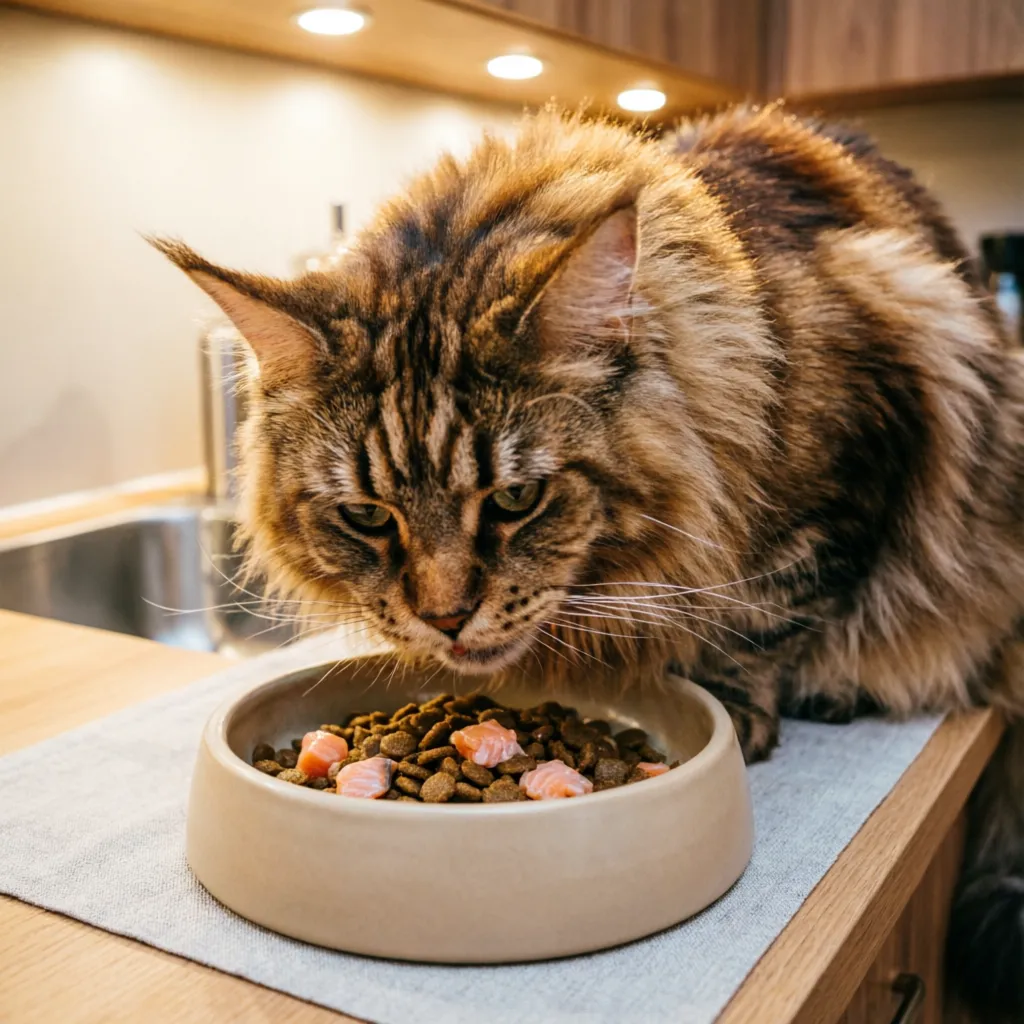
Maine Coons benefit from a balanced combination of both food types:
| Type | Pros | Cons | Recommendation |
|---|
| Dry Food | Convenient, dental benefits, cost-effective | Low moisture, high carbs | 60-70% of diet |
| Wet Food | High moisture, protein-rich, filling | Expensive, spoils quickly | 30-40% of diet |
| Raw Diet | Natural, high protein | Safety concerns, nutritional balance | Only with vet guidance |
Foods to AVOID: Complete Toxic List
These Foods Are POISONOUS to Cats
Never feed these to your Maine Coon under any circumstances. If ingested, contact your vet immediately.
Highly Toxic
- Chocolate (all types)
- Onions & Garlic
- Grapes & Raisins
- Xylitol (sweetener)
- Alcohol
Harmful Foods
- Caffeine
- Raw eggs
- Raw fish
- Milk (lactose intolerant)
- Dog food
Maine Coon Specific
- High-sodium foods
- Processed meats
- Large bones (choking)
- Raw pork
- Excessive liver
Hydration: Why Water Matters More
Maine Coons are descendants of cats from the Northeastern US - naturally adapted to cooler, damper environments. They often don't drink enough water.
Why Water is Critical
- Prevents urinary problems
- Supports kidney function
- Helps digestion
- Prevents constipation
How to Increase Water Intake
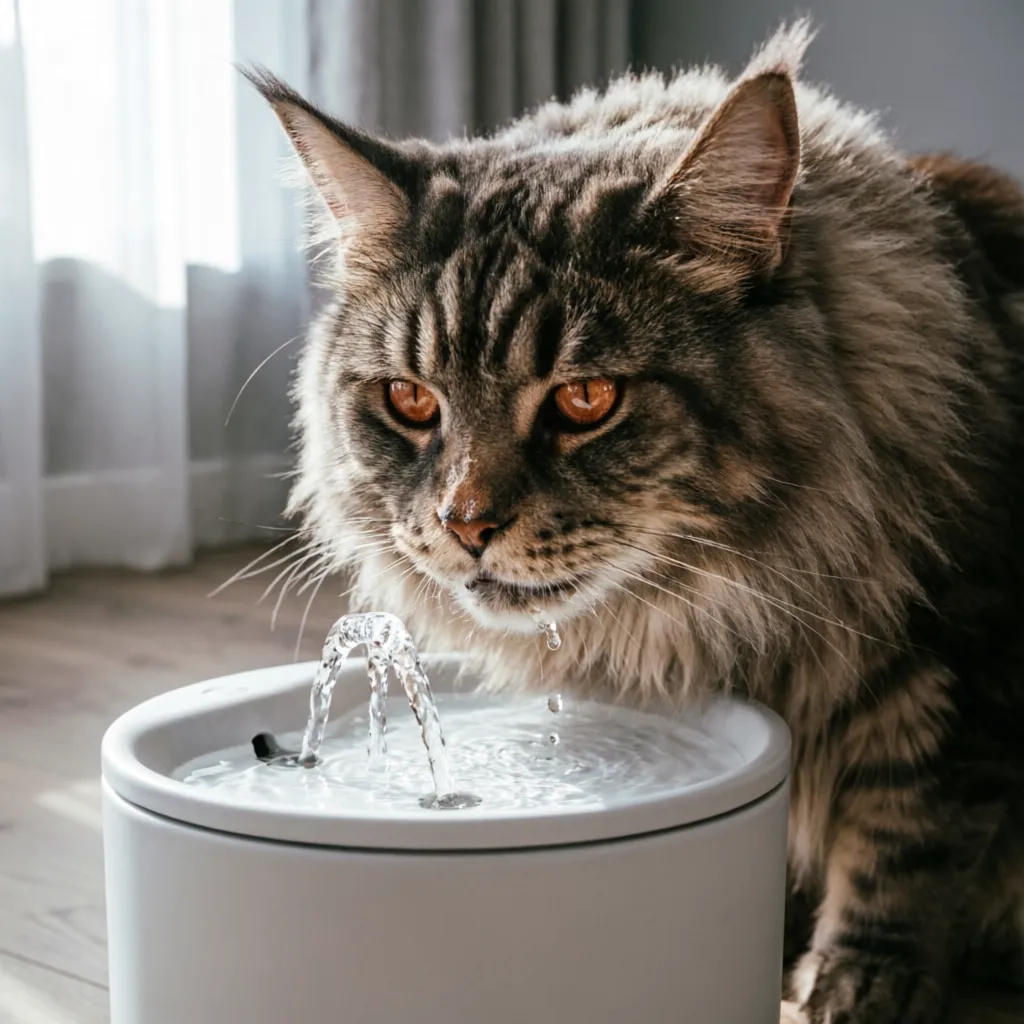
- Use a water fountain (running water)
- Place multiple water bowls
- Add water to wet food
Weight Management Plan
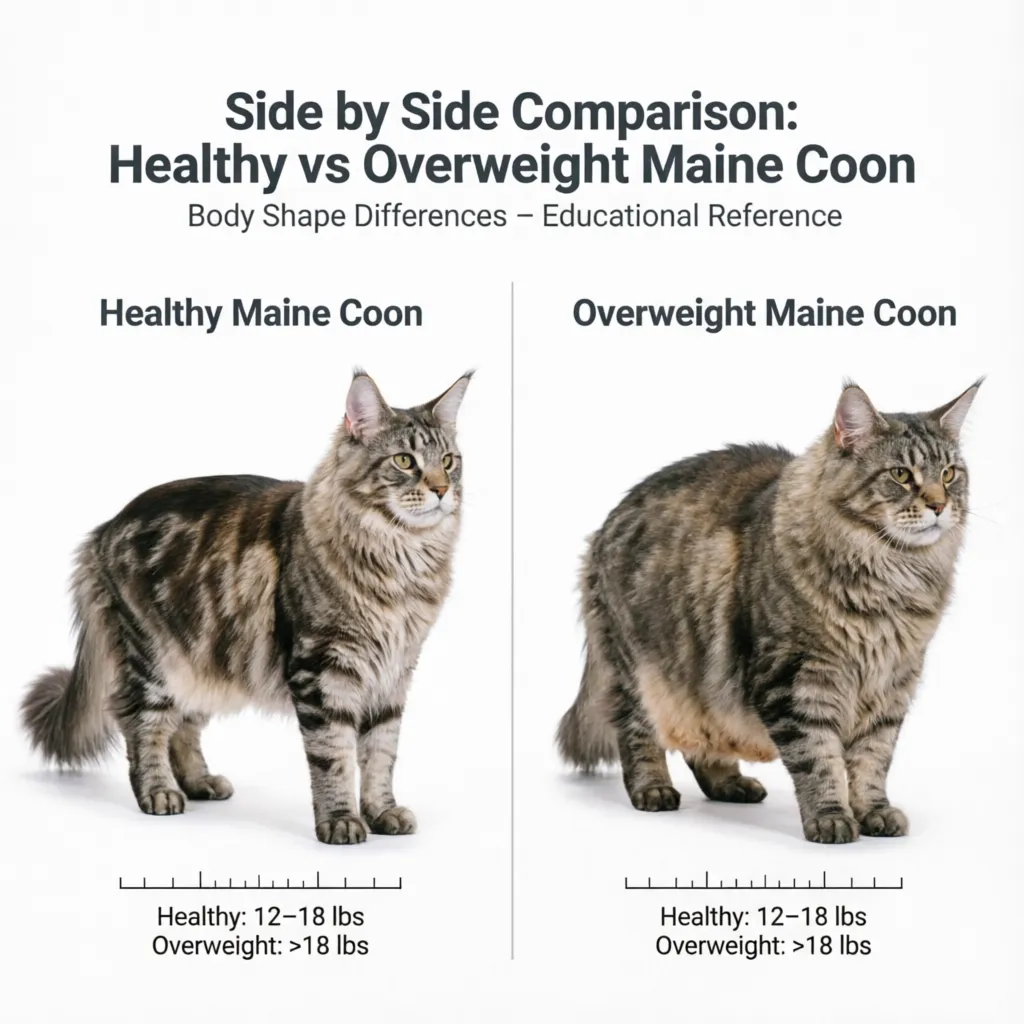
Keeping your Maine Coon at ideal weight is crucial for joint health:
| Status | Male Weight | Female Weight | Visual Signs |
|---|
| Underweight | Below 5kg | Below 3.5kg | Ribs visible, no fat pad |
| Ideal | 6-10kg | 4-7kg | Visible waist, fat pad on belly |
| Overweight | 11-12kg | 8-9kg | No visible waist |
| Obese | Above 12kg | Above 9kg | Fat deposits everywhere |
Safe Weight Loss Tips
Exercise
Play 15-20 minutes daily with interactive toys, laser pointers, feather wands.
Portion Control
Measure food precisely. No free-feeding. Treats max 10% of daily calories.
The Correct Way to Switch Foods
Never Switch Foods Abruptly
Sudden food changes can cause digestive upset, vomiting, and diarrhea. Always transition gradually.
7-Day Transition Method
| Day | Current Food | New Food |
|---|
| Days 1-2 | 75% | 25% |
| Days 3-4 | 50% | 50% |
| Days 5-6 | 25% | 75% |
| Day 7 | 0% | 100% |
Homemade Cat Food: Basic Recipe
If you want to prepare food at home, follow these safe guidelines:
Safe Protein Sources
- Chicken (cooked, boneless)
- Turkey (lean)
- Fish (cooked, boneless)
- Rabbit
Safe Additions
- Cooked eggs
- Pumpkin (plain)
- Carrots (cooked)
- Fish oil
Never Include
- Onions/Garlic
- Seasonings
- Salt
- Raw meat
Important Warning
Homemade diets must be nutritionally balanced. Always consult with your vet or a pet nutritionist before switching to homemade food long-term.
FAQ: Common Nutrition Questions
Basic Feeding
Q: How much should I feed my Maine Coon?
A: Adult Maine Coons typically need 70-100 calories per kg of body weight daily. A 7kg cat needs about 500-700 calories per day. Check food packaging and adjust based on activity level.
Q: How many times a day should I feed them?
A: Adults: 2 meals daily. Kittens (under 1 year): 3-4 meals. Seniors: 2-3 smaller meals. Consistency in timing helps regulate digestion.
Q: Can I leave food out all day (free-feeding)?
A: Not recommended for Maine Coons. They're prone to overeating, which strains their joints. Scheduled meals with measured portions are healthier.
Health & Nutrition
Q: Can Maine Coons eat human food?
A: Occasionally, small amounts of plain cooked chicken, fish, or eggs are fine. But never feed chocolate, onions, garlic, grapes, or any toxic foods.
Q: What treats are safe?
A: Freeze-dried chicken, small amounts of cooked fish, cat grass. Keep treats under 10% of daily calories to avoid weight gain.
Hydration
Q: How much water should a Maine Coon drink?
A: About 50-60ml per kg of body weight daily. A 7kg Maine Coon should drink roughly 350-420ml water. Wet food adds significant moisture.
Q: My cat won't drink water. What can I do?
A: Try a water fountain (cats prefer running water), place bowls away from food/litter, use wide ceramic bowls, add water to wet food.
Breed-Specific Critical Diseases
HCM - Hypertrophic Cardiomyopathy
Maine Coons are HIGH RISK. The heart muscle becomes thickened. Symptoms: rapid breathing, hind leg paralysis, lethargy. Annual echocardiogram is essential starting at 1 year old.
Hip Dysplasia
MODERATE-HIGH risk due to large size. Symptoms: reluctance to jump, stiff gait. X-ray at 1 year old recommended. Weight control is crucial.
Emergency Knowledge
Acute Breathing Difficulty
Signs: open-mouth breathing, blue gums. This is a medical emergency - possible acute heart failure. Go to vet immediately.
Sudden Hind Leg Paralysis
Signs: dragging hind legs, cold paws, vocalizing in pain. Likely a blood clot. Time is critical - must see vet within 2 hours.